LicitaLAB
Designing the core experience of a public procurement SaaS
PERIOD
2021 – 2024
PRODUCT
SaaS B2B
Public Procurement
ROLE
Founding Product Designer
ENGINEERING TEAM
Samantha Moreno
Matías Valenzuela
Iván Henríquez
Francisco Martínez
LicitaLAB is a SaaS platform that helps companies find and manage business opportunities published on Mercado Público, Chile’s public procurement platform. In a context where reviewing tenders manually can be slow, exhausting, and difficult to scale, the product aimed to simplify this work through advanced search, customizable settings, tracking, and automation.
I joined the team at a very early stage. The product already had a functional foundation, but its different features did not yet form a fully connected experience. Search, opportunity details, tracking, and management each addressed specific needs, but the product lacked a shared structure that supported the users’ entire process.
My challenge was not only to design new features, but to help the product develop a coherent shape as it continued to grow.
My role
I joined LicitaLAB as its sole Product Designer and worked closely with a team of four developers from 2021 to 2024.
I owned the end-to-end product experience: defining the information architecture, designing new workflows, improving existing features, establishing reusable patterns, and collaborating with engineering throughout implementation.
Because the product and the business were evolving at the same time, my work constantly moved between different levels of detail. On some days, I was defining how the platform’s main workflows should connect; on others, I was solving specific interaction or content problems needed for the next release.
This meant balancing immediate business needs with a longer-term responsibility: ensuring that every new feature contributed to a coherent product rather than feeling like part of a collection of isolated solutions.
As LicitaLAB’s Founding Product Designer, I helped define its structure, key workflows, and design foundations as the platform grew to more than 300 clients.
From discovery to action: the product’s core journey
At first, it was easy to think of search as the product’s main experience. However, finding a tender was only one stage in a much broader process.
Users also needed to understand whether an opportunity was relevant, decide who should own it, track its status, and prepare for the next action. Treating each of these moments as a standalone feature would have resulted in a fragmented experience.
We therefore reframed the core experience as a connected journey:
Discover → Evaluate → Track → Assign → Act
This journey became a reference for defining what information each view needed to provide and how users could move through the different stages without losing context.
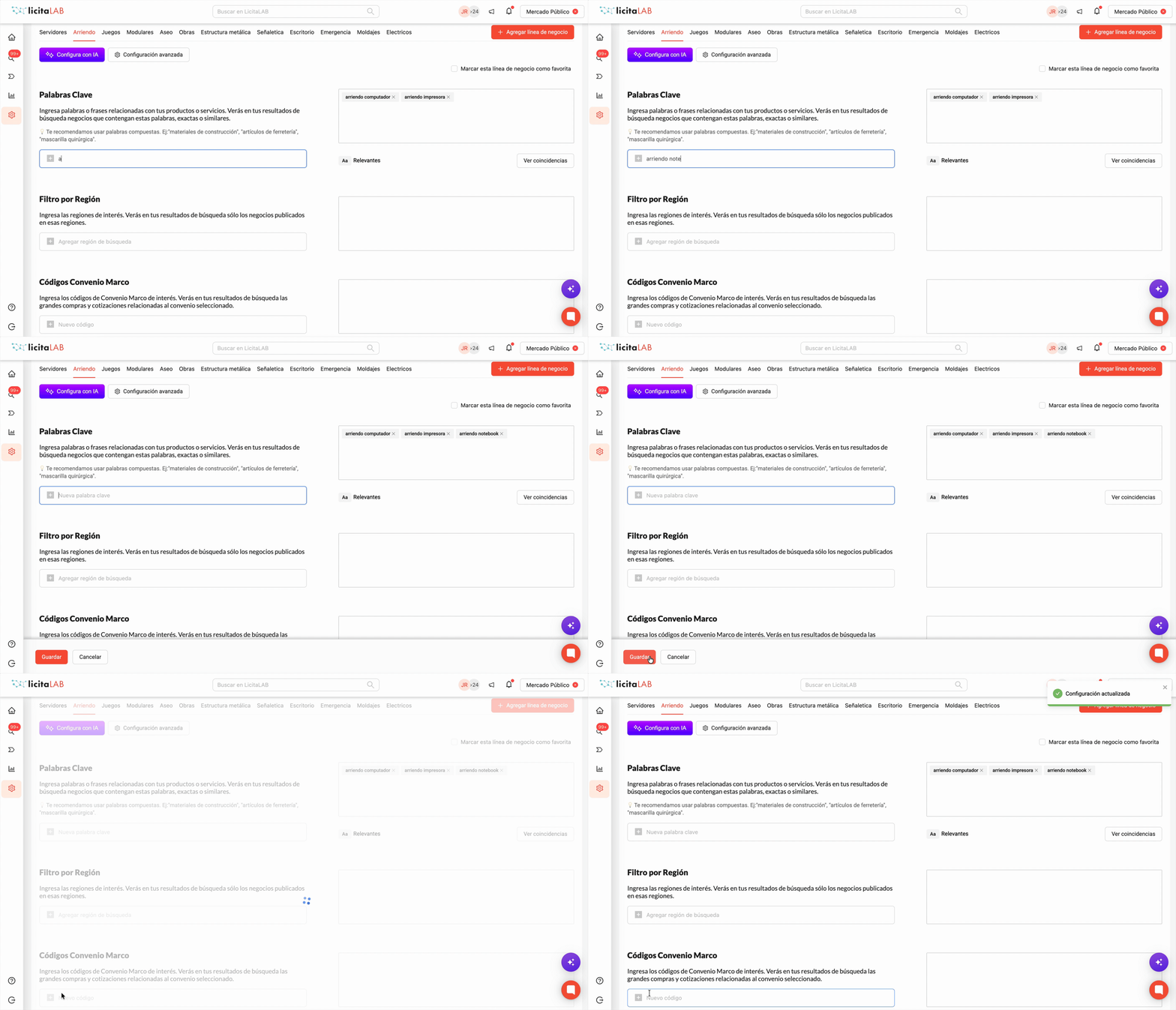
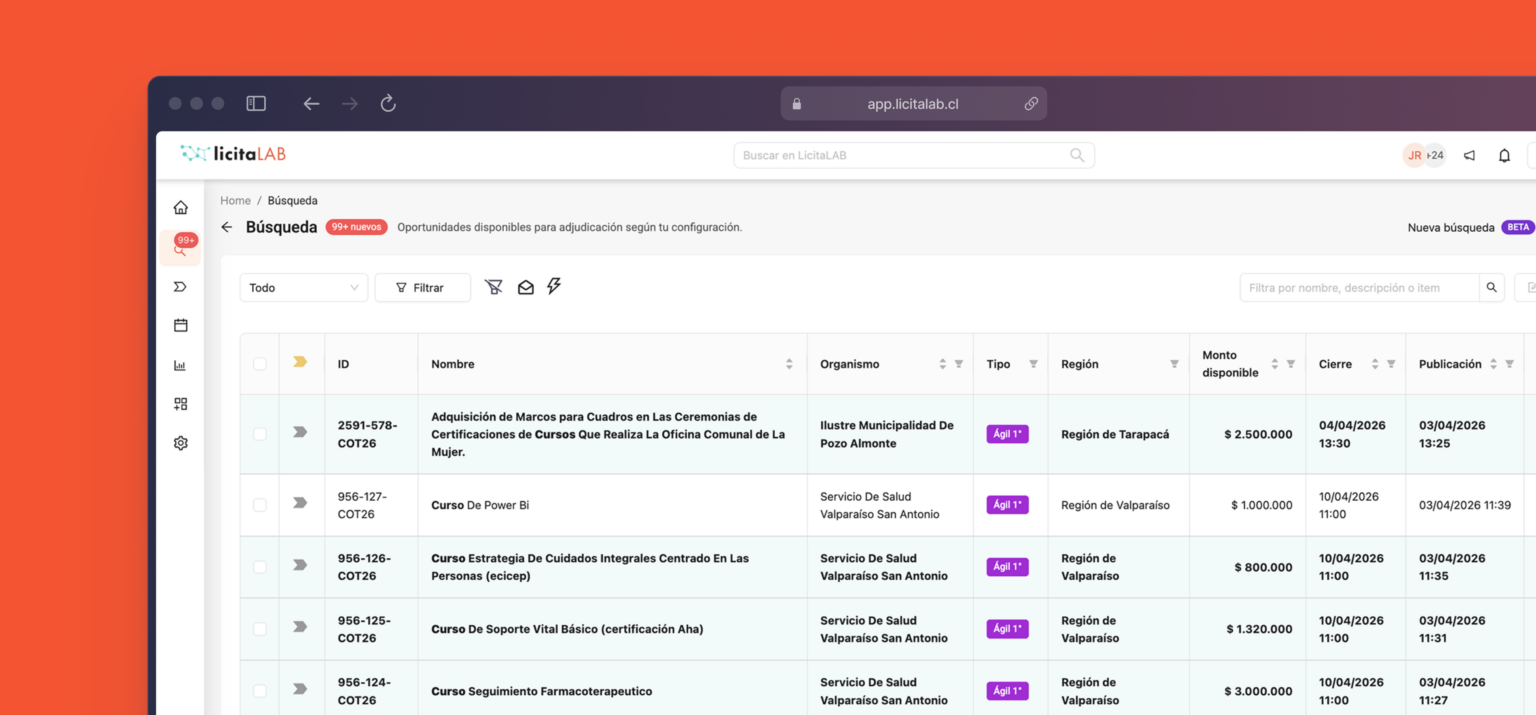
Within search, the challenge was not simply to help users find tenders, but to help them quickly recognize which opportunities were worth reviewing. I worked on evolving the search experience, filters, and customizable settings to reduce the effort required to find relevant results and prevent users from having to rebuild their searches every time they returned to the platform.
Within search, the challenge was not simply to help users find tenders, but to help them quickly recognize which opportunities were worth reviewing. I worked on evolving the search experience, filters, and customizable settings to reduce the effort required to find relevant results and prevent users from having to rebuild their searches every time they returned to the platform.
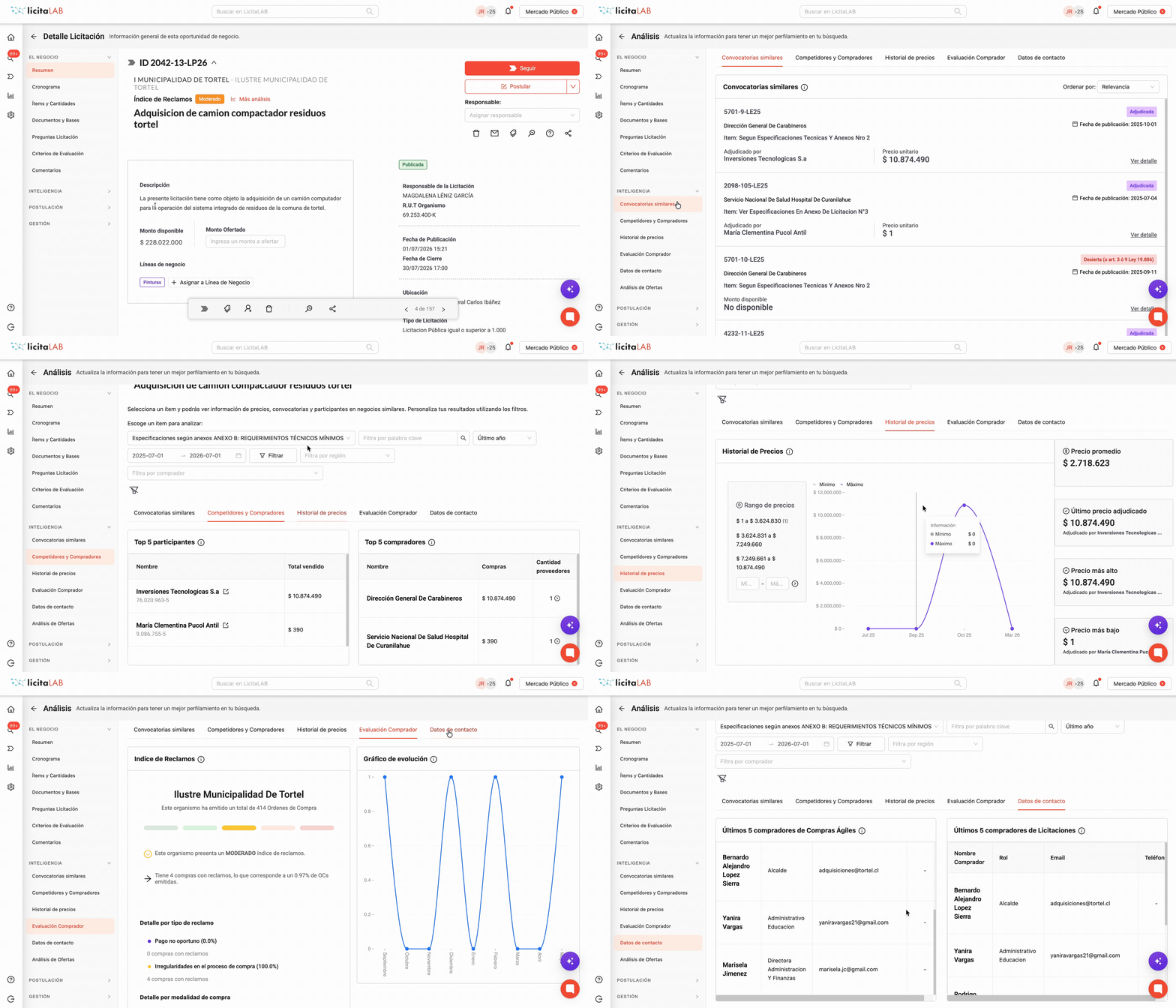
Once an opportunity had been identified, users needed to understand it in greater depth. Tender information could be extensive, technical, and distributed across multiple sections and documents, so the challenge was to organize that complexity without passing it directly on to the user.
I worked on the information hierarchy, navigation within each tender, and the relationship between key details, documents, and available actions. The goal was to help users quickly understand what an opportunity involved, what its conditions were, and what they needed to review before deciding whether to move forward.
Maintaining continuity between search and the opportunity detail was also important. When opening a tender, users needed to preserve the context of the opportunity they had selected and clearly understand what their next action could be.
However, finding and evaluating an opportunity was not enough. Tenders also needed to become part of the teams’ everyday workflows.
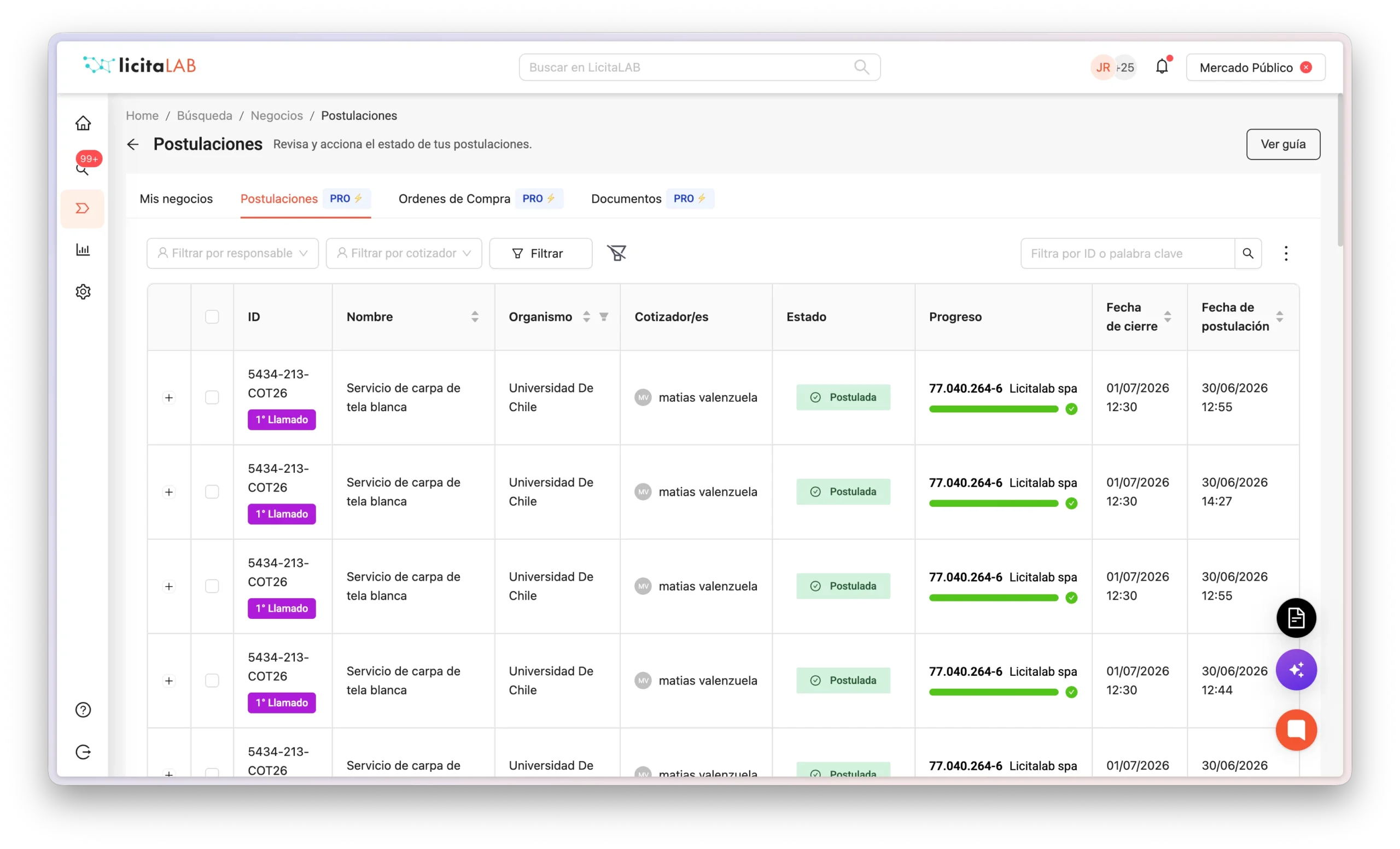
The journey therefore continued through tracking, assignment, and management features. These capabilities made it possible to see which opportunities were being reviewed, what stage they were in, and who was responsible for moving them forward.
I worked on defining statuses, actions, and patterns that helped turn a discovered opportunity into a concrete task. The experience needed to communicate not only what was happening, but also what the user could do next.
Connecting these moments allowed LicitaLAB to evolve from a search-focused tool into a platform that supported a broader part of the teams’ workflow.
As we introduced new features, the risk of creating different behaviors, styles, or solutions for similar problems also increased. To prevent this, I began defining reusable components, interaction patterns, and shared criteria that could be applied across different areas of the platform.
The design system did not emerge as an isolated deliverable, but as a direct response to the needs of both the product and the team. Each new pattern needed to support implementation, reduce repeated decisions, and maintain a recognizable experience for users.
Working closely with engineering was essential. Many decisions were reviewed during implementation, balancing the user experience with technical constraints and available timelines. This allowed us to build new features on top of existing foundations rather than starting from scratch with every release.
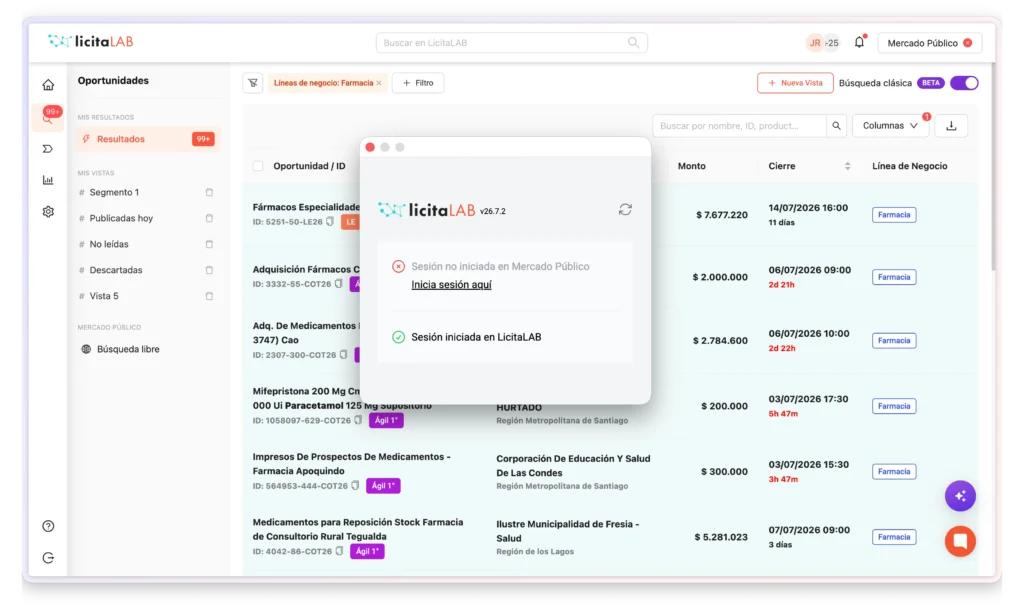
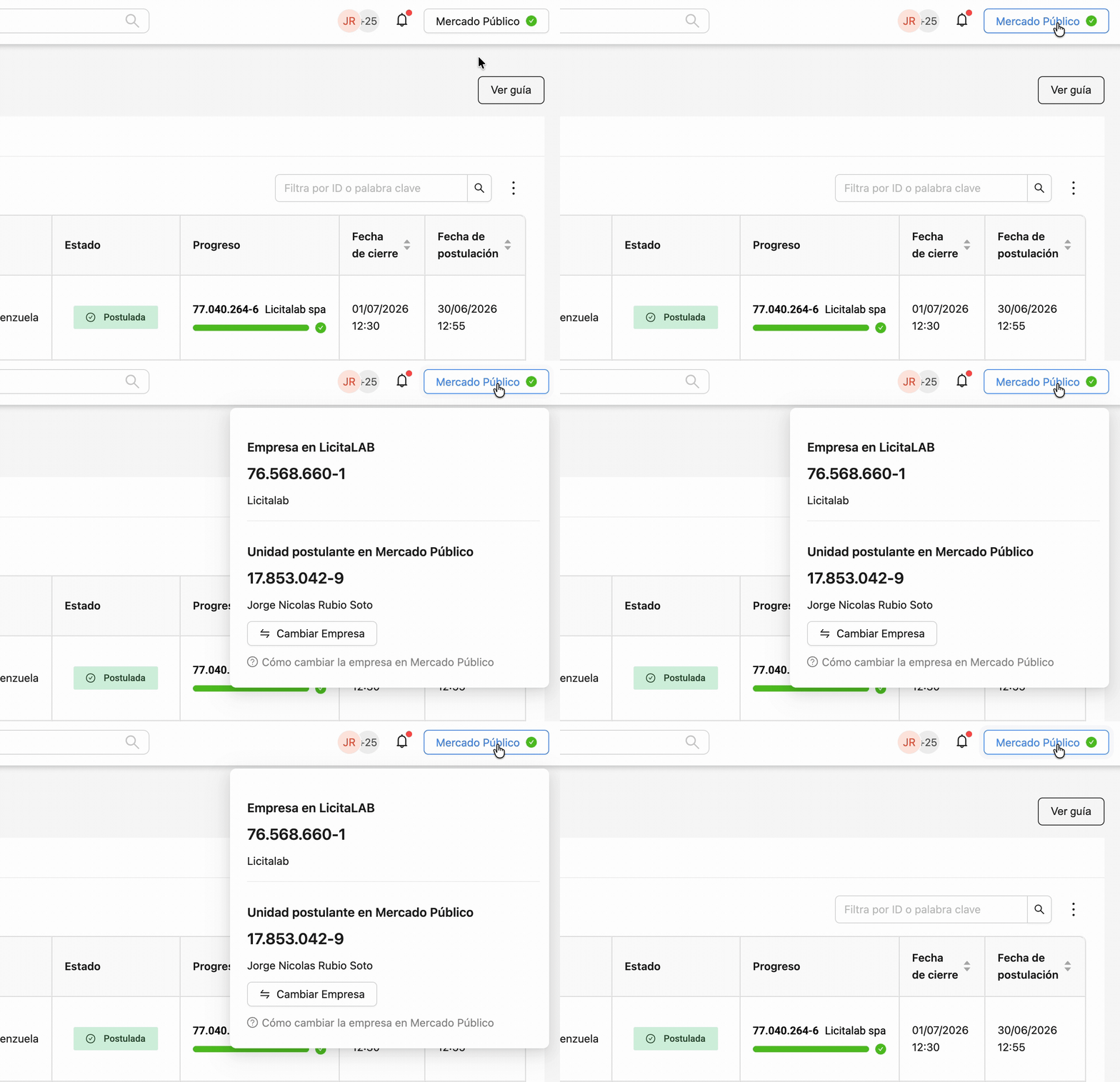
A Chrome extension connected LicitaLAB directly with Mercado Público. This integration allowed users to move from managing a business opportunity in LicitaLAB to submitting their application on Mercado Público, creating a more continuous experience from discovery to application.
Learnings
During my time at LicitaLAB, the product grew in scope, complexity, and maturity. We launched new features, connected its main workflows more effectively, and created a more consistent experience as the platform grew to more than 300 clients. In a space that can often feel technical and difficult to navigate, that clarity was the result of many small decisions, continuous iteration, and an ongoing focus on how the product should feel in everyday use.
This experience taught me how to design while the product itself was still being defined: making decisions with incomplete information, balancing immediate needs with a long-term vision, and maintaining shared principles as priorities changed. More than solving individual screens, I learned how to create coherent relationships between the different parts of a product that needed to grow without losing clarity.